
Lactate test at your home in Utrecht
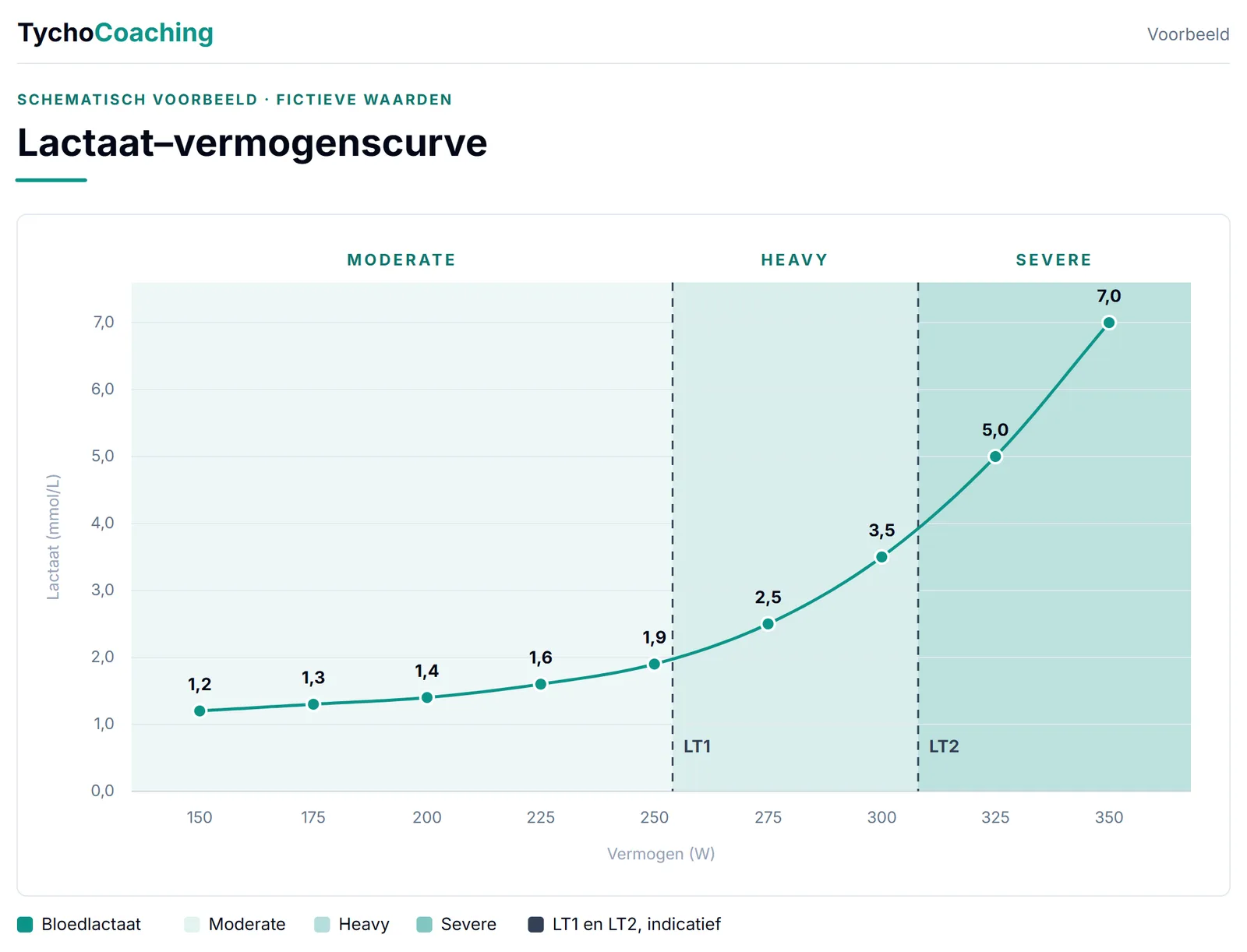
A lactate test at your home in Utrecht, on your own bike and trainer. You ride a stepped test with four-minute steps; after every step I measure your lactate concentration. From that I determine your two thresholds, LT1 and LT2, and your training zones. €100, including the report and an explanation, bookable on its own.
- Your first and second lactate threshold (LT1 and LT2)
- Focused training with Intervals.icu or TrainingPeaks
- Run by a movement scientist (MSc)
Price
€100per test
Including the report and an explanation.
Bookable on its own, without coaching.
- Stepped protocol, four-minute steps.
- LT1 and LT2 as the basis for your intensity zones.
- Training zones for Intervals.icu or TrainingPeaks
What you get
LT1, LT2 and training zones for your cycling training.
The performance test is a stepped lactate test: at every step I measure your blood lactate, and from that curve I derive LT1 and LT2. Getting your training intensity right is what makes fitness improve in a way that lasts.
Further reading: Wat is een lactaattest, en wat heb je er werkelijk aan? (in Dutch)
Why LT1
The threshold you cannot estimate.
Of your two thresholds, the first, LT1, is the hardest to find and the most useful. You cannot derive it from an FTP test, nor from a heart rate formula. A talk test comes close, but pinning down where it sits takes a lactate measurement or a CPET. That is why almost nobody has it set correctly.
And that is exactly where you build your base. Just below LT1 you ride at the highest intensity at which your metabolism still gets the work done almost entirely oxidatively: the stimulus on your mitochondria is large, while the accompanying stress stays small. That stress, by the way, does not come from the lactate itself — lactate is fuel. What makes it hard is the drop in pH that comes with rising anaerobic glycolysis. Above LT1 that flux climbs, and then you pay recovery for a stimulus you could have had more cheaply.
What keeps surprising me: in juniors, LT1 often sits lower than you would expect from their power. So their endurance rides need to be slower than they themselves think. Precisely the group that least wants to hear it, and gains the most from it.
How the test runs
Stepped, four minutes per step, to exhaustion.
The test gives you training zones for cycling. I measure on your own bike, on your own trainer.
I bring the analyser, strips, lancets and a sharps bin; all single use, and the waste leaves with me. The test is bookable on its own, without coaching — if you want to know what to do with the result, I go through it on the spot.
- 1
Resting sample first
One sample seated, after at least five minutes of rest, before the warm-up.
- 2
Easy warm-up
Ten minutes below the first step, no openers.
- 3
Stepped test
Four minutes per step, nine to eleven steps, more power each step.
- 4
Fingertip sample every step
A drop of blood in the last 30 seconds of every step.
- 5
To exhaustion
Stop a step early and it pushes your LT2 down.
- 6
Post-test samples
Three samples afterwards: at +1, +3 and +5 minutes.
- Location and duration
- I test at your home in Utrecht itself, not in the surrounding area, on Tuesdays and Thursdays between 10:00 and 14:00. Allow about an hour and a half.
- What you provide
- Your own bike on your own Tacx or home trainer: I measure with the power meter you train with. Plus a fan, towel and bottle.
- Preparation
- Eat normally, but no heavy meal in the two to three hours before. No hard training the day before: tired legs lift your low steps.
The best moment to test is the start of a build period. You then set your base period on measured numbers, and you have a reference point for a retest.
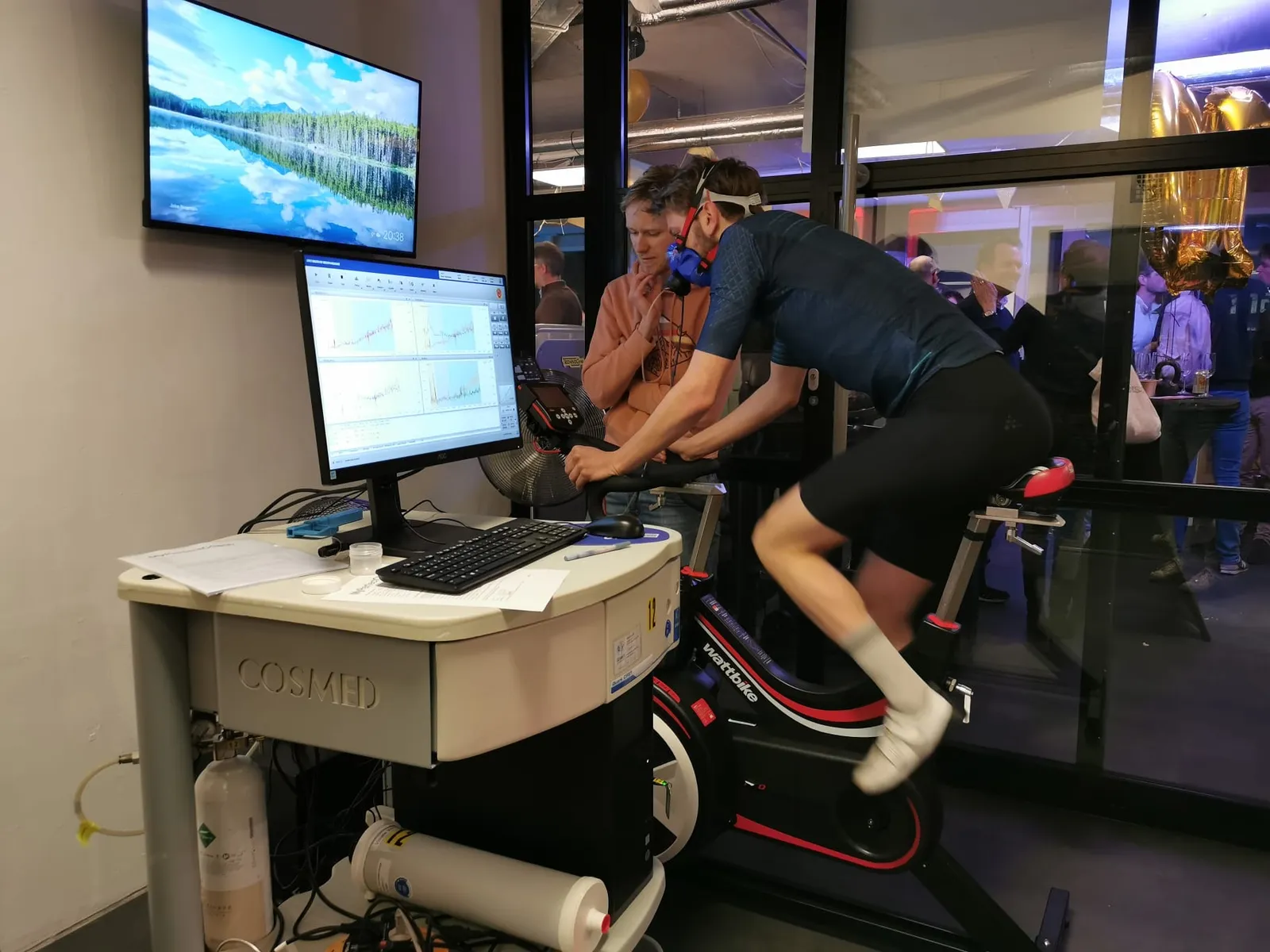
I am Tycho Parmentier, movement scientist (MSc, VU Amsterdam) and cell and molecular biologist (MSc, NTNU Trondheim). During my graduate research I worked a great deal with lactate measurements; since moving to Utrecht I have been doing them at riders’ homes.
After the test I map out where you stand, where the most gain sits for you, and how that relates to your goal. A test is a snapshot: just as much of its value is that a retest shows whether anything has actually changed.
Request a test
Request a performance test.
Pick a preferred moment and fill in your details. I confirm the date by mail and send you the preparation.
Pick a moment straight from my calendar. If that does not work, use the form below.
Rather email or call? tychocoach@gmail.com · +31 6 47528472
Frequently asked questions
What riders want to know beforehand.
- Why do a performance test?
- The test shows where you stand now. I estimate your two thresholds, LT1 and LT2, in watts and heart rate, and base your training zones on them. LT1 matters most: it sets the power of your easy endurance rides, and your FTP does not tell you where it is.
- How does the test work?
- It is a stepped test on your own bike and trainer: four minutes per step, more power at every step, until you can no longer hold the power asked. In the last 30 seconds of every step I measure your blood lactate with a finger prick.
- How do I prepare for the test?
- No hard training the day before. Eat normally, but no heavy meal in the two to three hours before the test. I also send the preparation with the confirmation.
- What do I need to set up?
- Your own bike on a trainer that measures power, or on a regular trainer with a separate power meter. Plus a fan, a towel and a bottle. I bring the measuring equipment and the finger-prick supplies.
- How often should I test?
- Two to three times a year is a good rhythm: at the start of your build-up, and again after a training block or before an important race. A retest makes progress visible and keeps your zones current.